Livermore's wine country setting and generous lot sizes make it one of the most desirable cities in the Tri-Valley. But many of its most popular neighborhoods, including Springtown, Sunset East, and Sunset West, are filled with single-story ranch homes built in the 1960s through 1980s. These homes sit on half-acre or larger lots with layouts designed for smaller families. A second-story addition lets homeowners double their living space while keeping the yard, pool potential, and outdoor lifestyle that drew them to Livermore in the first place.
Now Booking Fall 2026: Schedule Your Consultation

Home Addition Contractor in Livermore
500+ projects
Since 2018
Limited Lifetime
Select Product Warranties
Get a FREE Consultation
We'll contact you in 3-5 minutes to discuss your project.
Your information is private and secure
For second-story pricing factors, use our Bay Area second story addition cost guide.
Your next step
Start Your Home Addition Consultation Online
Share your property and expansion goals. We will discuss the existing home, feasibility, design, permits, and the next planning step.
Home addition brands and contractor credentials


Customer-Service Obsessed
Responsive from consultation through project closeout
Architect and general contractor
One accountable team
Licensed, bonded, and insured
Verified business credentials
Addition Services 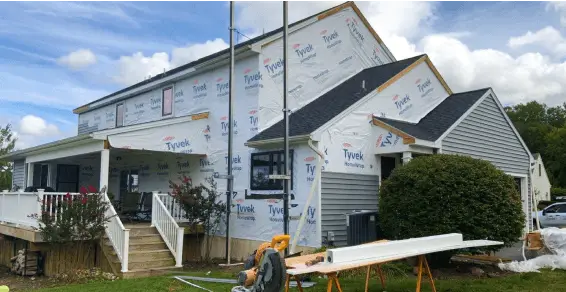
Start With the Home Expansion Path You Need
Second-Story Additions
Vertical expansion planned around the existing foundation, framing, stair location, roof changes, seismic work, utilities, and occupied-home logistics.
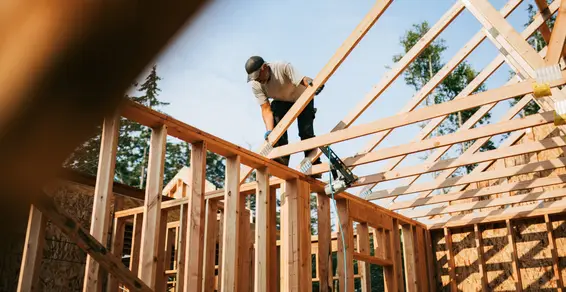
Room Extensions
Attached ground-floor space coordinated with the existing plan, foundation, roof, openings, drainage, building systems, and architectural character.
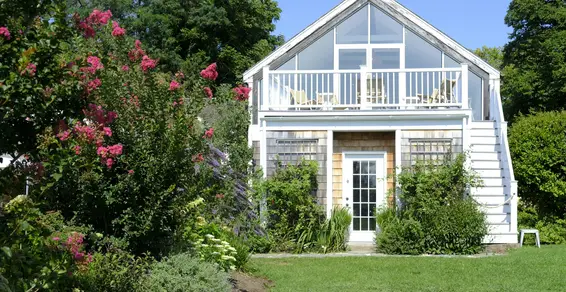
Guest Houses and Detached Living Space
A separate project path for detached guest space. Independent dwelling units also require ADU-specific feasibility and permit review.
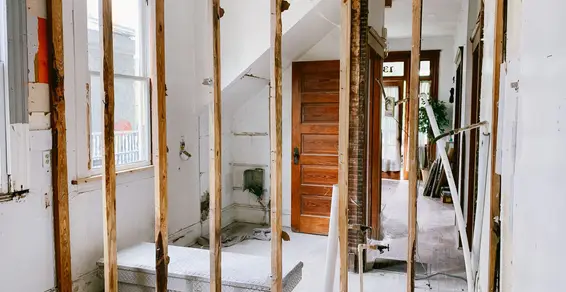
Whole-House Remodels
Coordinated work across most rooms and building systems when the project changes the home beyond one added space.
Building up in Livermore means designing for the area's inland climate. Summer temperatures regularly exceed 100 degrees, and the Altamont Pass channels strong winds across the valley. Hamilton Exteriors specifies materials rated for Climate Zone 12, including impact-resistant roofing, thermally broken window frames, and insulation packages that exceed Title 24 minimums. We also engineer roof-to-wall connections that handle sustained wind loads, an often-overlooked detail in second-story builds.
Livermore's building department reviews second-story plans carefully, with attention to height limits, setback compliance, and neighborhood compatibility. We submit complete structural and architectural packages that address these review criteria upfront, which keeps the permitting timeline to 6-8 weeks for most projects. From foundation reinforcement through framing, roofing, and final finishes, our architect-led team manages the entire build under one contract.
Neighborhoods We Serve
Second-Story Additions Across Livermore Neighborhoods
Local planning starts with the site, neighborhood context, access, and applicable city review.
Springtown
Springtown's 1960s-era ranch homes are strong second-story candidates. Most sit on slab foundations that need steel reinforcement at key load points. We've engineered multiple Springtown additions that add 800-1,200 square feet upstairs while preserving the neighborhood's low-profile streetscape by stepping the second story back from the front facade.
Sunset East
Sunset East features 1970s-80s tract homes with predictable framing that simplifies second-story engineering. The challenge here is matching existing stucco and rooflines so the addition looks original. Our design team surveys your home's exact materials and profiles before drafting plans, ensuring a seamless blend between old and new construction.
Sunset West
Sunset West ranch homes typically have post-and-pier or raised foundations that offer good access for reinforcement work. Many homeowners here add a master suite with views toward the Livermore Hills. We design second stories that capture these sightlines while managing solar heat gain through strategic window placement and overhangs.
Downtown Livermore
Downtown Livermore's older homes near First Street often have character details worth preserving. Second-story additions here require careful architectural planning to maintain the home's original proportions. We design additions that complement existing Craftsman and mid-century details rather than competing with them.
South Livermore
South Livermore's wine country properties tend to be larger homes on acreage, where second-story additions focus on panoramic views of the vineyards and surrounding hills. We design expansive upstairs living areas with covered balconies that take advantage of South Livermore's rural setting.
Granada
Granada's mix of housing eras means each second-story project starts with a thorough structural assessment. Homes from the 1970s and 1980s in this area often have roof trusses that must be replaced with conventional framing to open up the second floor. We handle the truss-to-rafter conversion as part of our design-build scope.
Project Management How Hamilton Exteriors
How Hamilton Exteriors
Manages Your Home Addition
Existing-Home Assessment
We review the foundation, framing, roof, utilities, drainage, access, and likely connection points before the addition design advances.
Design and Permit Coordination
Our team coordinates the layout, architecture, structural engineering, energy documents, permits, comments, revisions, and approved plans.
Addition Construction
We manage site protection, structural connections, foundation, framing, weatherproofing, building systems, finishes, inspections, and documented changes.
Integration and Closeout
We check connections between new and existing work, complete final inspections and the punch list, and review applicable warranty terms.
Google rating 4.6 ★ from 47 public reviews
Homeowner Reviews of Our Construction Work
Public feedback from remodeling and related construction projects.
K
Kevin L
via Google
We hired them for a bigger renovation. Alex was very responsive, which I appreciated. We changed a couple requirements during the job and they worked with us on it without making it complicated. Overall, everything went pretty smooth and their quality of work is solid. I recommend them highly!
J
Jacob Rothwell
via Google
Alex Li helped me with my basement remodeling, they were super efficient, and the work came out better than I could’ve ever imagined! Thank me later!
M
Maan D
via Google
Had Hamilton Exteriors do a full kitchen renovation. Natasha helped a lot with scheduling and coordination which made things easier on our end. We got regular updates and didn’t feel left in the dark at any point. The team paid attention to details and made sure everything was installed properly. the whole process felt pretty smooth and the kitchen came out really clean. happy with the final result
L
Lekan Ajayi
via Google
This service was good and very efficient, all remodeling was done to liking. Jacob was a great worker and helped with answering questions that was needed. Would recommend to others.
Google rating: 4.6/5 from 47 public reviews
Read reviews on Google Mid Market
Home Additions Costs in Livermore
$180,000–$400,000
Median home value in Livermore: $1,050,000
Prices reflect Livermore's mid market and Alameda County labor rates. Actual costs depend on home size, materials, and project complexity. We provide free, itemized estimates with no hidden fees.
Get Your EstimateCompare Broad Home Expansion Paths
Swipe to compare all options.
| Feature | Second Story | Room Extension | Guest House | Whole-House Remodel |
|---|---|---|---|---|
| Relationship to home | New level above | Attached ground-floor space | Detached structure | Existing home transformed |
| Main structural focus | Foundation capacity, framing, and roof | New foundation and connection | New foundation and separate structure | Existing framing and building systems |
| Site impact | Keeps most yard area | Uses ground-floor footprint | Uses a separate site area | Usually stays within the home footprint |
| Early planning focus | Stairs, structure, roof, and occupancy | Layout, setback, roof, and drainage | Access, utilities, setbacks, and use | Phasing, systems, structure, and relocation |
| Dedicated guide | Second story | Room extension | Guest house | Whole-house remodel |

Addition Financing
Plan Your Home Addition With Approved Credit
Financing may be available for eligible room extensions, second-story additions, and larger remodeling projects with approved credit. During planning, we review the scope and explain current lender programs, terms, amounts, and payment timing.
Ask which current options fit your home addition project.
 Call Now (650) 977-3351
 Frequently Asked Questions
Didn't find the answer to your question? Call Now (650) 977-3351
What areas do you serve?
We serve Northern California across three regions: the San Francisco Bay Area, Greater Sacramento, and the Central Valley. Our published guides cover 14 counties and 88 cities. Our Castro Valley and Sacramento offices support local estimating, permit coordination, and project planning across these regions.
How does billing and financing work?
Financing may be available for eligible projects with approved credit. Available terms depend on lender approval, project scope, and current programs. Your project manager can review the options that apply before work begins. We also accept checks, ACH, and major credit cards.
Are you licensed and insured?
Yes. Hamilton Exteriors holds CSLB License #1078806, active general liability coverage, and the required contractor bond. We also hold GAF Master Elite and James Hardie Elite Preferred credentials. We can provide current proof of coverage before work begins.
Do I need a permit for my exterior project?
Permit requirements depend on the project scope and local jurisdiction. Hamilton Exteriors coordinates required applications, plan documents, corrections, and inspections. Permit fees and allowances appear in the proposal before construction begins.
How much does a second-story addition cost in Livermore?
Second-story additions in Livermore typically run $300-$500 per square foot, or $250,000-$500,000 for a full second floor. Costs depend on foundation reinforcement needs, finishes, and whether you're adding plumbing upstairs. With Livermore's median home price at $1M, building up is often $200K-$400K less than buying a larger home.
Can my Livermore ranch home support a second story?
Most 1960s-80s ranch homes in Livermore can be engineered for a second story. We evaluate your foundation type, soil conditions, and existing framing during a free consultation. Slab foundations typically need steel moment frames at load points, while raised foundations may need new footings. We provide a structural feasibility assessment before you commit.
How long does a second-story addition take in Livermore?
Plan for 5-7 months total: 6-8 weeks for permitting through Livermore's building department, then 3-5 months of construction. During framing, your existing roof is removed and temporarily weatherproofed. We schedule roof removal during Livermore's dry season whenever possible to minimize weather risk.
Do I need to move out during a second-story addition?
Most families stay in their home during construction. The main disruption comes during the 2-3 week roof removal and framing phase when upper-level rooms are exposed. We install temporary weather protection and stage work to keep living areas functional. Many Livermore clients set up a temporary bedroom downstairs during this window.
Will a second story change my home's curb appeal in Livermore?
Done right, a second story improves curb appeal. We step the upper floor back from the front facade to avoid a top-heavy look, match existing materials and roofline pitch, and add architectural details like dormers or a covered balcony. The goal is a home that looks like it was designed as two stories from the start.
Your Next Step
Plan Your Project With a Clear Scope
Financing may be available with approved credit for eligible projects.
Tell us about your project. We usually call within 3–5 minutes to schedule the next step.

21634 Redwood Rd Unit F, Castro Valley, CA 94546
Serving 88 cities across the Bay Area, Greater Sacramento, and Central Valley. Explore all service areas →