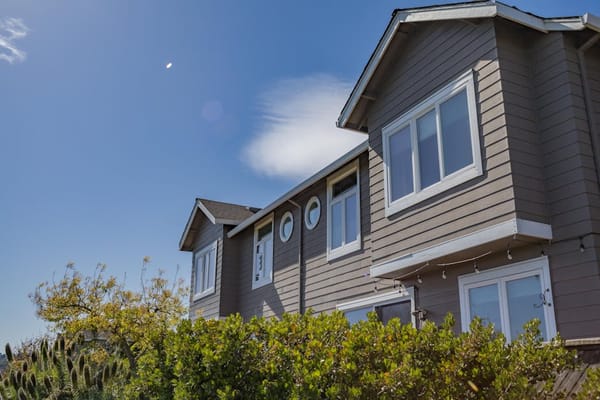

Siding installation in Napa, California, costs between $12,500 and $28,000 for a typical 2,000-square-foot home in 2026 (Hamilton Exteriors 2024-2026 project data). The final price depends on your material choice, your home's architectural complexity, and whether your property falls within a Wildland-Urban Interface (WUI) fire zone, which most of Napa County does. Fiber cement siding, the most popular choice for Napa homeowners, runs $2,100 to $2,325 per 100 square feet installed. Vinyl siding costs less upfront at $975 to $1,275 per square, while stucco averages $1,950 per square.
This guide breaks down every factor that affects your siding cost in Napa, from material pricing to fire zone compliance requirements, so you can budget accurately before calling a contractor. At Hamilton Exteriors, we provide fully itemized estimates with per-square pricing. every line itemized, no buried costs.
Average Siding Installation Cost in Napa (2026)
For a single-family home with 1,500 to 2,500 square feet of exterior wall area, here is what you can expect to pay for siding installation in Napa this year:
- Vinyl siding: $12,500 to $22,000
- James Hardie fiber cement siding: $18,000 to $28,000
- Stucco siding: $16,000 to $26,000
- Wood siding (cedar, redwood): $20,000 to $35,000
Siding contractors price jobs by the square, which equals 100 square feet of wall area. Per-square pricing in Napa ranges from $975 to $2,325 depending on the material, not including tear-off of existing siding, sheathing repairs, or permit fees (Hamilton Exteriors 2024-2026 project data). Napa's labor market sits roughly 10 to 15 percent above the national average, driven by the Bay Area's overall cost of living and the specialized skills required for fire-zone-compliant installation.
Why do Napa siding costs run higher than some neighboring counties? Three reasons. First, most of Napa County is designated as a Very High Fire Hazard Severity Zone (FHSZ) by CAL FIRE, which mandates specific materials and installation methods under California Building Code Chapter 7A. Second, Napa's older housing stock, particularly in the downtown core and along the Silverado Trail, often requires sheathing repair or replacement once the old siding comes off. Third, Napa's wine-country aesthetic conventions on rural parcels frequently involve custom trim details, larger homes, and architectural review processes that add to the total project cost.
Cost by Siding Material in Napa
James Hardie Fiber Cement Siding: $2,100 to $2,325 per Square Installed
James Hardie fiber cement is the most commonly recommended siding material for Napa homes, and for good reason. It carries a Class A fire rating, resists moisture and rot, and stands up to Napa's hot, dry summers without warping or cracking. Hamilton Exteriors is a James Hardie Elite Preferred installer, the highest certification level, which means your installation carries an extended warranty and is backed by factory-trained crews.
The most popular James Hardie products installed in Napa include:
- HardiePlank Lap Siding: The classic horizontal lap profile. Available in 4-inch, 5-inch, and 7-inch exposures. Pairs well with Napa's Craftsman and farmhouse-style homes. $2,100 per square installed (Hamilton Exteriors 2024-2026 project data).
- HardieShingle Siding: Individual shingle panels that mimic cedar shake. Popular on Napa's Victorian and wine-country estate homes. $2,325 per square installed.
- HardiePanel Vertical Siding: Large-format vertical panels for a modern, board-and-batten look. Increasingly popular on contemporary Napa builds. $2,175 per square installed.
Fiber cement delivers an 86 percent return on investment at resale according to Remodeling Magazine's 2024 Cost vs. Value Report. For Napa homeowners, that ROI is amplified by buyer awareness of fire safety. A home with Class A fire-rated siding in a WUI zone is more attractive to informed buyers than one with combustible materials.
Vinyl Siding: $975 to $1,275 per Square Installed
Vinyl siding is the most affordable option for Napa homeowners, but it comes with important caveats. Standard vinyl is not fire-rated and can melt or warp under the intense heat of a wildfire exposure. For homes in Napa's WUI zones, vinyl is generally not recommended unless you choose a fire-rated insulated vinyl product, which costs more and still does not match fiber cement's fire performance.
That said, vinyl can be a smart choice for Napa properties outside the highest-risk fire zones, particularly rental properties, ADUs, and budget-conscious projects. Premium CertainTeed and Ply Gem vinyl products offer 60-plus color options, wood-grain textures, and insulated backing that improves energy efficiency.
- Standard vinyl: $975 per square installed (Hamilton Exteriors 2024-2026 project data). 20- to 30-year lifespan.
- Insulated vinyl: $1,275 per square installed. Better energy performance and impact resistance. 25- to 40-year lifespan.
Stucco Siding: $1,950 per Square Installed
Stucco is a natural fit for Napa's Mediterranean and Spanish Colonial homes, which are common throughout the valley and downtown historic districts. Traditional three-coat stucco is non-combustible, making it an excellent fire-safe choice. It also handles Napa's temperature swings well, expanding and contracting with the daily cycle of hot days and cool nights.
Stucco installation in Napa requires careful attention to the weather-resistant barrier and flashing details. The West Napa Fault runs through the area, and while stucco is rigid, modern elastomeric finishes and control joints accommodate the minor movement associated with moderate seismic activity. The 2014 South Napa earthquake (magnitude 6.0) caused widespread cosmetic cracking in older stucco homes, and current best practices for stucco installation in seismically active areas include enhanced lath attachment and flexible control joints at all plane changes.
- Three-coat stucco: $1,950 per square installed (Hamilton Exteriors 2024-2026 project data). 50- to 80-year lifespan with proper maintenance.
- EIFS (synthetic stucco): $1,600 to $1,900 per square installed. Lighter weight, better insulation value, but requires meticulous flashing to prevent moisture intrusion.
Wood Siding: $2,500 to $3,500 per Square Installed
Cedar and redwood siding are traditional choices for Napa's wine-country estates and older Victorian homes. They offer natural beauty that is hard to replicate with manufactured products. However, wood siding is combustible and does not meet WUI fire zone requirements without expensive fire-retardant treatment. For Napa homes in Very High FHSZ areas, wood siding is generally not permitted under California Building Code Chapter 7A.
If your Napa property is outside the WUI zone and you are committed to the look of natural wood, expect to pay $2,500 to $3,500 per square installed for clear-grade cedar or redwood (Hamilton Exteriors 2024-2026 project data). Maintenance is significant: wood siding in Napa's dry summers requires re-staining or painting every 3 to 5 years to prevent cracking and UV damage.
Napa Fire Zone Requirements for Siding
Most of Napa County falls within a CAL FIRE-designated Very High Fire Hazard Severity Zone. This classification, updated after the devastating 2017 Tubbs Fire and 2020 Glass Fire, carries specific requirements for exterior building materials under California Building Code Chapter 7A.
For siding, the key requirement is that materials must be non-combustible or ignition-resistant. Practically speaking, this means:
- Fiber cement siding (James Hardie) meets the requirement. It is non-combustible and carries a Class A flame spread rating.
- Stucco meets the requirement. Three-coat stucco is inherently non-combustible.
- Vinyl siding does not meet the requirement in its standard form. It melts and can ignite under radiant heat exposure.
- Wood siding does not meet the requirement unless treated with fire retardant and tested to Chapter 7A standards.
Fire zone compliance adds $500 to $1,500 to a typical Napa siding project, primarily for upgraded underlayment, ember-resistant flashing details, and vent screens (Hamilton Exteriors 2024-2026 project data). These costs are not optional if your property is in a WUI zone. Your contractor should verify your property's fire zone designation during the estimate process and include all required compliance measures in the bid. If a contractor suggests skipping fire zone requirements, find a different contractor.
Napa County's building department can confirm your property's FHSZ designation. The City of Napa Building Division handles permits for properties within city limits.
Napa Climate and Siding Performance
Napa's climate is Mediterranean: hot, dry summers with daytime temperatures regularly exceeding 90 degrees, and mild, wet winters with most rainfall concentrated between November and March. This climate pattern creates specific demands on siding materials.
Summer heat and UV exposure. Napa's intense summer sun can cause vinyl siding to warp or fade over time if it is not a premium UV-stabilized product. Fiber cement and stucco handle heat without issue. Wood siding requires regular sealing to prevent drying, cracking, and UV degradation.
Winter moisture. While Napa's annual rainfall is moderate (roughly 24 inches per year according to NOAA climate data), the concentrated wet season means siding must handle periods of sustained moisture. Fiber cement's engineered formulation resists moisture absorption and will not swell or rot. Stucco, when properly installed with a drainage plane, sheds water effectively. Vinyl siding's interlocking design provides good water resistance, but any breach in the weather-resistant barrier behind it can trap moisture against the sheathing.
Diurnal temperature swing. Napa's daily temperature can swing 30 to 40 degrees between daytime highs and nighttime lows, especially in the summer. This thermal cycling causes expansion and contraction in all siding materials. Fiber cement and stucco handle these cycles with minimal movement. Vinyl siding requires proper installation with adequate expansion gaps at all joints and trim pieces; if installed too tightly, it will buckle.
Napa Siding Costs by Home Size
The size of your home is the single largest cost driver for a siding project. Siding is priced per square (100 square feet of wall area), and your total wall area depends on your home's footprint, number of stories, and architectural complexity. Pricing reflects Hamilton Exteriors 2024-2026 project data.
| Home Size (sq ft) | Estimated Wall Area (squares) | Vinyl Cost Range | Fiber Cement Cost Range | Stucco Cost Range |
|---|---|---|---|---|
| 1,200 | 14–18 | $13,500–$23,000 | $29,500–$42,000 | $27,500–$35,000 |
| 1,800 | 18–24 | $17,500–$30,500 | $38,000–$56,000 | $35,000–$47,000 |
| 2,400 | 22–30 | $21,500–$38,000 | $46,000–$70,000 | $43,000–$58,500 |
| 3,200 | 28–38 | $27,500–$48,500 | $59,000–$88,500 | $54,500–$74,000 |
Wall area is typically 1.2 to 1.5 times your home's square footage, depending on ceiling height, number of stories, and architectural complexity. A two-story home has less wall area per square foot of living space than a single-story ranch. Napa's wine-country estates, which often feature single-story layouts with expansive footprints, tend toward the higher end of the wall-area multiplier.
What Affects Your Napa Siding Cost?
Two homes on the same Napa street can receive quotes that differ by $10,000 or more (Hamilton Exteriors 2024-2026 project data). Here are the factors that drive those differences:
Existing siding removal. Tearing off old siding adds $100 to $200 per square (Hamilton Exteriors 2024-2026 project data). If your home has multiple layers of old siding, or if the existing material is stucco (which requires more labor to remove), costs increase. Asbestos abatement, if required on older Napa homes built before the 1980s, adds significant cost and must be handled by a licensed abatement contractor.
Sheathing repair. Once the old siding comes off, damaged sheathing is sometimes discovered underneath. Napa's older homes, particularly those built before 1960 in the downtown core and along the Silverado Trail, often have water damage or dry rot behind the siding. Sheathing replacement runs $75 to $150 per 4-by-8-foot sheet, and it is not uncommon to need 5 to 15 sheets on an older home (Hamilton Exteriors 2024-2026 project data).
Architectural complexity. Every corner, window, door, and architectural detail adds labor. Napa's Victorian homes, with their ornate trim, bay windows, and multiple gables, cost significantly more per square to side than a simple rectangular ranch. Multi-story homes require scaffolding or lift equipment, adding $1,500 to $4,000 to the project (Hamilton Exteriors 2024-2026 project data).
Permit fees. Siding replacement requires a building permit in Napa. Permit fees are typically calculated as a percentage of the project valuation. Based on the City of Napa's fee schedule, expect to pay $400 to $900 for a siding permit on a typical single-family home. Your contractor should pull the permit and include the fee as a line item in your estimate.
Seismic considerations. The West Napa Fault runs through the area, and Napa is classified as having moderate to high seismic risk. While siding itself is not structural, the attachment method matters. Modern fiber cement and stucco installations include flexible connections and control joints that accommodate minor movement. If your home's framing shows signs of seismic stress from the 2014 earthquake or earlier events, those issues should be addressed before new siding goes on.
Wine-country aesthetic requirements. Napa's rural parcels and historic districts sometimes have design review requirements that affect material choice and color. If your property is in a historic overlay zone or subject to HOA covenants, factor in additional time for design review and potentially higher material costs for approved products.
Hidden Costs to Watch For
A siding replacement can uncover issues that were not visible during the initial estimate. Reputable contractors will discuss potential hidden costs upfront and provide pricing for common contingencies.
Rotten sheathing replacement. Once the old siding comes off, damaged OSB or plywood sheathing is sometimes discovered. Replacement runs $75 to $150 per 4-by-8 sheet (Hamilton Exteriors 2024-2026 project data). Older Napa homes with original wood siding are particularly susceptible to hidden moisture damage.
Fascia and soffit repair. The boards along the roof edge and underneath the eaves are often deteriorated, especially on homes with older wood fascia. Repair or replacement typically runs $15 to $25 per linear foot (Hamilton Exteriors 2024-2026 project data).
Window and door flashing. Modern building code requires integrated flashing at all window and door openings. If your existing flashing is inadequate or deteriorated, replacement adds $50 to $150 per opening (Hamilton Exteriors 2024-2026 project data). This is not optional; proper flashing is your primary defense against water intrusion.
Insulation upgrades. If your walls are open during a siding replacement, it is an ideal time to add or upgrade exterior insulation. Rigid foam insulation board adds $1 to $3 per square foot but can significantly improve your home's energy performance, particularly during Napa's hot summers (Hamilton Exteriors 2024-2026 project data).
Structural repairs. If the framing underneath the siding shows signs of seismic stress, dry rot, or termite damage, repairs must be completed before new siding goes on. Costs vary widely depending on the extent of damage.
How to Save on Your Napa Siding Installation
Siding replacement is a significant investment, but there are legitimate ways to reduce your cost without compromising quality or fire safety.
Get multiple itemized estimates. Obtain at least three estimates from licensed Napa contractors. Insist on itemized bids that break out tear-off, materials, labor, permits, and cleanup as separate line items. Lump-sum bids make it impossible to compare and often hide markups.
Schedule in the off-season. November through February is the slower season for exterior contractors in Napa. While rain can cause delays, contractors often offer more competitive pricing during these months. You may save 5 to 10 percent on labor.
Bundle with other exterior work. If you are also planning a roof replacement, window replacement, or exterior painting, bundling the work with one contractor can reduce mobilization costs and sometimes yields a package discount. A roof replacement combined with siding allows the contractor to integrate flashing details seamlessly.
Choose the right material for your fire zone. If your property is in a WUI zone, do not pay for wood siding only to discover it does not meet code. Fiber cement is the most cost-effective fire-rated option and delivers the highest ROI at resale. Choosing it from the start avoids expensive change orders.
Ask about manufacturer rebates. James Hardie and CertainTeed periodically run rebate programs. Your contractor should know about current promotions. Rebates typically range from $100 to $500 for qualifying installations (Hamilton Exteriors 2024-2026 project data).
How Hamilton Exteriors Prices Siding in Napa
At Hamilton Exteriors, we approach siding pricing differently from most Napa contractors. Here is what you can expect:
Fully itemized estimates. Every estimate breaks out each cost component: tear-off and disposal, weather-resistant barrier, siding material, trim, flashing, labor, permit fees, and cleanup. You see exactly where every dollar goes.
Per-square pricing. We quote a specific price per square for each material option, not a vague range. This makes it easy to compare materials and understand how your home's wall area affects the total.
Architect-led assessment. Unlike most siding companies, Hamilton Exteriors is led by a licensed architect and general contractor, Alex Hamilton Li (CSLB #1078806). This means we evaluate your siding as part of the whole building system, considering fire safety, moisture management, energy performance, and aesthetics together. If your home needs sheathing repair, seismic upgrades, or insulation improvements, we will tell you upfront rather than after the project starts.
Fire zone expertise. We know Napa's WUI requirements inside and out. Every estimate for a Napa property includes a fire zone verification and all required Chapter 7A compliance measures. We will not cut corners on fire safety, and we will not surprise you with compliance costs mid-project.
James Hardie Elite Preferred certification. As a factory-certified Elite Preferred installer, we can offer James Hardie's extended warranty on every fiber cement installation. Our crews are trained directly by James Hardie and recertified annually.
Ready for a on-site inspection and itemized estimate? Call us at (650) 977-3351 or get your free quote online.
Frequently Asked Questions
How much does siding installation cost in Napa?
Siding installation in Napa costs $12,500 to $28,000 for a typical 2,000-square-foot home, depending on the material (Hamilton Exteriors 2024-2026 project data). Vinyl siding runs $12,500 to $22,000, James Hardie fiber cement runs $18,000 to $28,000, and stucco runs $16,000 to $26,000. These ranges include tear-off of existing siding, new weather-resistant barrier, materials, labor, trim, and cleanup. Permit fees and structural repairs are additional.
What is the best siding material for Napa's fire zones?
James Hardie fiber cement siding is the best choice for Napa homes in WUI fire zones. It is non-combustible, carries a Class A fire rating, and meets all California Building Code Chapter 7A requirements. Stucco is also an excellent fire-safe option. Standard vinyl and wood siding do not meet WUI requirements and are generally not recommended for Napa properties in Very High FHSZ areas.
Do I need a permit for siding replacement in Napa?
Yes. The City of Napa requires a building permit for siding replacement. Permit fees typically range from $400 to $900 for a single-family home, based on the project valuation (Hamilton Exteriors 2024-2026 project data). Your contractor should pull the permit and include the fee in your estimate. If a contractor suggests skipping the permit, consider that a red flag.
How long does siding installation take in Napa?
Most siding installations in Napa take 1 to 2 weeks, depending on the home's size, material, and architectural complexity. Vinyl siding is fastest at 3 to 5 days. Fiber cement typically takes 5 to 10 days. Stucco takes the longest at 2 to 3 weeks due to the multiple coats and curing time required between each coat.
Does new siding increase home value in Napa?
Yes. According to Remodeling Magazine's 2024 Cost vs. Value Report, fiber cement siding delivers an 86 percent return on investment at resale. In Napa's competitive real estate market, fire-rated siding is increasingly valued by buyers who are aware of wildfire risk. A home with Class A fire-rated siding and documented WUI compliance is more attractive to informed buyers.
How does Napa's climate affect siding performance?
Napa's hot, dry summers and mild, wet winters create specific demands on siding. Fiber cement and stucco handle the temperature swings and UV exposure well. Vinyl siding requires UV-stabilized formulations to prevent fading and warping. Wood siding needs regular sealing to prevent drying and cracking in summer and moisture absorption in winter. The diurnal temperature swing of 30 to 40 degrees means all siding materials must be installed with proper expansion accommodation.
What is the difference between fiber cement and vinyl siding for Napa homes?
Fiber cement is non-combustible, carries a Class A fire rating, lasts 50-plus years, and meets WUI fire zone requirements. Vinyl siding costs less upfront but is not fire-rated, can warp in Napa's summer heat, and has a shorter lifespan of 20 to 30 years. For most Napa homes, especially those in fire zones, fiber cement is the stronger long-term investment despite the higher upfront cost.
Can new siding help with energy efficiency in Napa?
Yes. Adding rigid foam insulation board behind new siding can significantly improve your home's thermal performance, reducing cooling costs during Napa's hot summers. Insulated vinyl siding also provides a modest efficiency improvement. Fiber cement and stucco both have good thermal mass, which helps moderate indoor temperatures by slowing heat transfer through the walls.
Related Reading
- Bay Area Siding Services — Full-service siding installation across all six Bay Area counties
- James Hardie Fiber Cement Siding — The best fire-rated siding for Napa WUI zones
- Roof Replacement Cost in the Bay Area (2026 Guide) — Pair your siding with a new fire-rated roof
- How Much Does an ADU Cost in the Bay Area? — Complete ADU pricing for Napa County