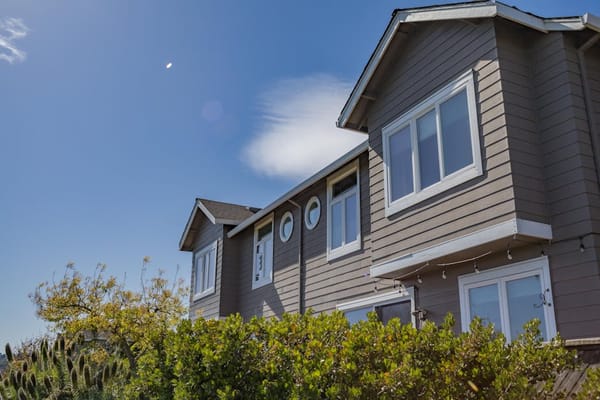

A full siding replacement in Milpitas, California costs between $12,500 and $28,000 for a typical single-family home in 2026 (Hamilton Exteriors 2024-2026 project data). The final price depends on the material you choose, the size and complexity of your home, and the condition of the underlying sheathing. James Hardie fiber cement siding — the most popular choice among Milpitas homeowners we work with — runs $2,100 to $2,325 per 100 square feet installed. Vinyl siding is more budget-friendly at $975 to $1,275 per square, while three-coat stucco averages $1,950 per square.
This guide breaks down every factor that affects your siding cost in Milpitas, from material options and permit fees to fire zone requirements and hidden repair costs. At Hamilton Exteriors, we provide fully itemized estimates with per-square pricing. every line itemized, every cost itemized buried in fine print.
Average Siding Cost in Milpitas (2026)
For a standard Milpitas home with 1,500 to 2,500 square feet of exterior wall area, here is what you can expect to pay for a full siding replacement in 2026:
- Vinyl siding: $12,500 to $22,000
- James Hardie fiber cement: $21,000 to $35,000
- Stucco (three-coat): $18,000 to $30,000
- Insulated vinyl: $16,000 to $26,000
Siding contractors price jobs by the "square," which equals 100 square feet of wall area. Per-square pricing in Milpitas and the broader Santa Clara County market ranges from $975 to $2,325 depending on the material, not including tear-off of existing siding or structural repairs (Hamilton Exteriors 2024-2026 project data).
Why do Milpitas siding costs run higher than the national average? Three factors drive the difference. First, Bay Area labor rates are 15 to 25 percent above the U.S. average because skilled siding crews must earn enough to live in one of the country's most expensive regions. Second, Santa Clara County permit fees add $400 to $900 to a typical siding project (Hamilton Exteriors 2024-2026 project data). Third, California's building code requires specific weather-resistant barrier and flashing details that exceed national minimums, adding material and labor cost.
Siding Cost by Material in Milpitas
James Hardie Fiber Cement: $2,100 to $2,325 per Square Installed
James Hardie fiber cement is the most popular siding material we install in Milpitas. It is engineered specifically for climates with moisture and temperature swings — exactly what Milpitas experiences with its hot, dry summers and cool, wet winters. The HZ5 product line resists moisture, fog, and the salt-laden air that drifts inland from the South Bay.
Key benefits for Milpitas homeowners:
- Class A fire rating — the highest available. This matters for homes in or near the eastern foothills, where wildfire risk is a growing concern.
- 86% return on investment at resale, according to Remodeling Magazine's 2024 Cost vs. Value Report.
- 50+ year lifespan with minimal maintenance beyond repainting every 15 to 20 years.
- Engineered to resist cracking, warping, and swelling during Milpitas temperature swings from 35°F winter mornings to 100°F summer afternoons.
Hamilton Exteriors is a James Hardie Elite Preferred installer — the highest certification level. This means our crews are factory-trained and your installation carries an extended warranty.
Vinyl Siding: $975 to $1,275 per Square Installed
Vinyl siding remains a practical choice for Milpitas homeowners seeking a lower upfront cost. Modern vinyl products from CertainTeed and Ply Gem offer significant improvements over the brittle, fading panels of decades past.
Standard vinyl runs $975 to $1,100 per square installed (Hamilton Exteriors 2024-2026 project data). Insulated vinyl, which includes a foam backing for improved energy performance and impact resistance, runs $1,100 to $1,275 per square. Both options come in 60+ colors and textures, including wood-grain patterns that mimic natural cedar.
The trade-off is lifespan. Vinyl siding lasts 20 to 30 years in the Milpitas climate, compared to 50+ for fiber cement. Vinyl can also warp in direct sun exposure — a consideration for south-facing and west-facing walls that receive intense afternoon sun during Milpitas summers, where temperatures regularly exceed 90°F.
Stucco Siding: $1,950 per Square Installed
Traditional three-coat stucco is common on Milpitas homes built in the 1960s through 1980s, particularly in established neighborhoods near the city center. Stucco offers excellent durability — 50 to 80 years with proper maintenance — and a seamless, monolithic appearance that suits Mediterranean and Spanish Colonial architecture.
The primary consideration with stucco is repair cost. When stucco cracks or separates from the underlying lath, water intrusion can cause extensive hidden damage. Stucco remediation — removing damaged sections, repairing lath and weather barrier, and applying new coats — averages $1,950 per square (Hamilton Exteriors 2024-2026 project data). Full stucco replacement on a Milpitas home typically runs $18,000 to $30,000.
Stucco also performs well for noise reduction due to its mass and continuous surface. This is a meaningful benefit for homes near I-880, Highway 237, or the Caltrain corridor.
What Affects Your Siding Cost in Milpitas?
Two homes on the same Milpitas street can receive quotes that differ by $10,000 or more (Hamilton Exteriors 2024-2026 project data). Here are the factors that drive those differences:
Wall area. This is the primary cost driver. Siding is measured in squares (1 square = 100 sq ft of wall area). A single-story ranch home might have 15 to 18 squares of exterior wall, while a two-story home could have 25 to 35 squares. Your wall area depends on your home's footprint, number of stories, and architectural complexity.
Number of stories. Two-story homes require scaffolding or pump jacks, which adds $1,500 to $4,000 to the project cost (Hamilton Exteriors 2024-2026 project data). Multi-story homes also take longer to side, increasing labor costs.
Existing siding removal. Tearing off old siding adds $100 to $200 per square depending on the material (Hamilton Exteriors 2024-2026 project data). Wood siding and stucco are more labor-intensive to remove than vinyl. If your home has multiple layers of siding — not uncommon on older Milpitas homes — removal costs increase.
Sheathing repair. Once the old siding comes off, damaged sheathing (the plywood or OSB layer beneath the siding) is sometimes discovered underneath. Replacement runs $75 to $150 per 4x8 sheet (Hamilton Exteriors 2024-2026 project data). On older Milpitas homes — particularly those built before 1980 — it is not uncommon to need 5 to 15 sheets replaced due to moisture damage or dry rot.
Architectural complexity. Every corner, window, door, and architectural detail requires additional cutting, flashing, and trim work. A home with 15+ windows, multiple bump-outs, and decorative gables will cost significantly more per square than a simple rectangular home.
Permit fees. The City of Milpitas requires a building permit for siding replacement. Permit fees typically run $400 to $900 depending on the project scope. Your contractor should pull the permit; if they suggest skipping it, find a different contractor. You can verify current fee schedules on the Milpitas Building Safety Division website.
Fire zone compliance. Homes in or near the Milpitas foothills may fall within Wildland-Urban Interface (WUI) zones as designated by CAL FIRE. WUI zones require specific fire-resistant materials and installation methods. Fiber cement siding carries a Class A fire rating and meets WUI requirements without modification. Vinyl siding does not meet WUI standards and cannot be used in fire zones.
Milpitas Climate and Siding Performance
Milpitas sits at the southern end of San Francisco Bay, where the climate creates specific challenges for exterior siding. Understanding these factors helps you choose a material that will perform well for decades.
Summer heat. Milpitas regularly sees summer temperatures above 95°F, with occasional spikes above 100°F. This intense heat, combined with direct sun exposure, causes some siding materials to expand, warp, or fade. Vinyl siding is most susceptible to heat-related issues on south-facing and west-facing walls. Fiber cement is dimensionally stable across temperature extremes and does not warp or melt.
Winter moisture. Milpitas receives 15 to 20 inches of rain annually, concentrated between November and March. Prolonged moisture exposure is the primary cause of siding failure in the Bay Area. Proper installation with a continuous weather-resistant barrier (WRB) and integrated flashing at all penetrations is essential. Hamilton Exteriors installs a full WRB system behind every siding project, creating a drainage plane that channels water down and out.
Fog and humidity. Morning fog from the South Bay creates persistent humidity, particularly in lower-elevation areas of Milpitas. This humidity accelerates wood decay and can cause moisture damage behind siding that appears intact from the outside. Fiber cement siding is impervious to rot and moisture damage, making it the most durable choice for Milpitas homes.
Seismic considerations. Milpitas is located near the Calaveras Fault, one of the most active fault lines in the Bay Area. While siding itself is not structural, the connection between siding and framing matters during seismic events. Fiber cement and stucco are rigid materials that require proper fastening to accommodate minor building movement. Vinyl siding is more flexible and less likely to crack during small tremors. All Hamilton Exteriors installations follow current California Building Code seismic requirements for exterior cladding attachment.
Milpitas Permit Requirements for Siding
The City of Milpitas requires a building permit for siding replacement projects. Here is what you need to know:
When a permit is required. Any siding replacement that involves removing existing siding and installing new material requires a permit. Minor repairs — replacing a few damaged panels or boards — typically do not require a permit, but full wall sections do.
Permit fees. Milpitas building permit fees for siding projects typically range from $400 to $900, depending on the project valuation. The fee is calculated based on the total cost of the work, including materials and labor. You can find current fee schedules on the Milpitas Community Development page.
Plan review. Most siding replacement projects do not require detailed architectural plans. However, if your project includes structural changes — such as adding new window openings or modifying wall framing — you will need stamped engineering drawings.
Inspections. Milpitas requires at least one inspection during a siding project: the weather-resistant barrier inspection. This inspection occurs after the old siding is removed and the new WRB is installed, but before the new siding goes on. A final inspection confirms the completed work meets code. Hamilton Exteriors schedules and manages all inspections as part of our permit service.
Fire zone requirements. If your Milpitas home is in a WUI zone, the building department will require fire-resistant siding materials that meet California Building Code Chapter 7A standards. Fiber cement and stucco both qualify. Vinyl siding does not.
Hidden Costs to Watch For
A siding replacement can uncover issues that were not visible during the initial inspection. Reputable contractors discuss potential hidden costs upfront and provide pricing for common contingencies.
Rotten sheathing replacement. Once the old siding comes off, damaged wall sheathing is sometimes discovered underneath. This is especially common on older Milpitas homes where moisture has penetrated behind the siding over decades. Replacement runs $75 to $150 per 4x8 sheet, and it is not uncommon to need 5 to 15 sheets (Hamilton Exteriors 2024-2026 project data). A good contractor includes a per-sheet price in the estimate so there are no disputes on the job.
Dry rot repair. Dry rot is fungal decay that destroys wood framing when moisture penetrates behind siding. The average water damage insurance claim in the Bay Area is $12,500, making prevention far more cost-effective than repair (Hamilton Exteriors 2024-2026 project data). If we discover dry rot during tear-off, repairs are completed before new siding goes on. This can add $1,000 to $5,000 to the project depending on the extent of the damage.
Trim and fascia replacement. The boards around windows, doors, and roof edges are often deteriorated on older homes. Replacing trim and fascia typically runs $15 to $25 per linear foot (Hamilton Exteriors 2024-2026 project data). Many homeowners choose to replace all exterior trim during a siding project for a consistent appearance.
Insulation upgrades. If your walls are open during siding replacement, it is an ideal time to add or upgrade wall insulation. Blown-in insulation can be installed through the sheathing before new siding goes on, improving your home's energy performance. This adds $1,500 to $3,000 to a typical project but can reduce heating and cooling costs by 10 to 20 percent (Hamilton Exteriors 2024-2026 project data).
Window and door flashing. Proper flashing around windows and doors is critical for preventing water intrusion. If existing flashing is deteriorated or improperly installed, replacement adds $200 to $400 per opening (Hamilton Exteriors 2024-2026 project data). This is not a corner to cut — water intrusion at windows and doors is the leading cause of hidden wall damage.
How to Save on Your Milpitas Siding Project
Siding replacement is a significant investment, but there are legitimate ways to reduce your cost without compromising quality.
Get multiple itemized estimates. This is the single most important thing you can do. Insist on estimates that break out tear-off, materials, labor, permits, and cleanup as separate line items. Lump-sum bids make it impossible to compare apples to apples and often hide markups. At Hamilton Exteriors, every estimate is fully itemized with per-square pricing.
Schedule in the off-season. November through February is the slower season for Bay Area siding contractors. While rain can cause delays, contractors often offer more competitive pricing during these months to keep their crews busy. You may save 5 to 10 percent on labor.
Combine projects. If you are planning to replace your roof, windows, or gutters in the next few years, consider combining them with your siding project. A single mobilization saves on setup costs, and contractors often discount multi-trade projects. Roof and siding replacement together can save $2,000 to $5,000 compared to doing them separately (Hamilton Exteriors 2024-2026 project data).
Choose the right material for your timeline. If you plan to stay in your home for 10+ years, fiber cement's 50+ year lifespan makes it the better long-term value despite the higher upfront cost. If you plan to sell within 5 years, vinyl siding's lower upfront cost may make more financial sense. Your project manager can walk you through the cost-per-year math for each option.
Ask about manufacturer rebates. James Hardie, CertainTeed, and other manufacturers periodically run rebate programs. Your contractor should know about current promotions. Rebates typically range from $100 to $500 for qualifying installations (Hamilton Exteriors 2024-2026 project data).
How Hamilton Exteriors Prices Siding in Milpitas
At Hamilton Exteriors, we believe pricing should be transparent and easy to understand. Here is how we approach it differently from most Bay Area siding contractors:
Fully itemized estimates. Every estimate we provide breaks out each cost component: tear-off and disposal, weather-resistant barrier, siding material, trim and flashing, labor, permit fees, and cleanup. You see exactly where every dollar goes.
Per-square pricing. We quote a specific price per square for each material option, not a vague range. This makes it easy to compare materials and understand how your wall area affects the total.
Licensed and certified. Hamilton Exteriors holds California State License Board (CSLB) license #1078806. We are a James Hardie Elite Preferred contractor, a distinction held by a small percentage of siding contractors nationwide. This certification means your installation is backed by factory training and an extended warranty.
Architect-led. Unlike most siding companies, Hamilton Exteriors is led by a licensed architect and general contractor. This means we evaluate your siding as part of the whole building system, considering moisture management, energy performance, structural integrity, and aesthetics together. If your walls need sheathing repair, or if a different material would perform better for your specific exposure, we tell you upfront rather than after the project starts.
Local experience. We have completed siding projects throughout Santa Clara County, including Milpitas, San Jose, Santa Clara, and Sunnyvale. Our crews know the Milpitas permit process, the local building inspectors, and the specific climate challenges that affect siding performance in this part of the South Bay.
Siding Material Comparison for Milpitas Homes. Pricing reflects Hamilton Exteriors 2024-2026 project data.
| Feature | Vinyl | James Hardie Fiber Cement | Stucco |
|---|---|---|---|
| Installed cost per square | $975 – $1,275 | $2,100 – $2,325 | ~$1,950 |
| Lifespan | 20 – 30 years | 50+ years | 50 – 80 years |
| Fire rating | Melts, not rated | Class A | Non-combustible |
| Milpitas climate suitability | Good (watch south/west walls) | Excellent (engineered for moisture) | Excellent (traditional Bay Area choice) |
| Maintenance | Low (wash annually) | Low (repaint every 15 yrs) | Low – moderate |
| ROI at resale | ~70% | 86% (Remodeling Magazine 2024) | ~80% |
| WUI fire zone compliant | No | Yes | Yes |
| Noise reduction | Minimal | Moderate | Good |
Frequently Asked Questions
How much does siding installation cost in Milpitas?
A full siding replacement in Milpitas costs $12,500 to $35,000 depending on the material and home size (Hamilton Exteriors 2024-2026 project data). Vinyl siding runs $975 to $1,275 per 100 sq ft installed. James Hardie fiber cement — the most popular choice — costs $2,100 to $2,325 per 100 sq ft. Stucco averages $1,950 per 100 sq ft. A typical 2,000 sq ft home with 20 squares of exterior wall area will cost $19,500 to $46,500 for a complete siding replacement. Every Hamilton Exteriors estimate is fully itemized with per-square pricing.
What is the best siding material for Milpitas homes?
James Hardie fiber cement is the best all-around choice for most Milpitas homes. It resists the moisture and temperature swings that characterize the South Bay climate, carries a Class A fire rating (important for foothill-adjacent properties), and delivers an 86% return on investment at resale. Vinyl siding is a practical budget option for homes not in fire zones. Stucco works well on Mediterranean and Spanish Colonial homes but requires more maintenance to prevent cracking.
Do I need a permit for siding replacement in Milpitas?
Yes. The City of Milpitas requires a building permit for siding replacement. Permit fees range from $400 to $900 depending on the project scope. The permit process includes a weather-resistant barrier inspection and a final inspection. Hamilton Exteriors handles the entire permit process — application, plan submission, and scheduling inspections. You can verify requirements on the Milpitas Building Safety Division website.
How long does a siding installation take in Milpitas?
James Hardie fiber cement siding projects typically take 1 to 2 weeks depending on your home's square footage, number of stories, and architectural complexity. Vinyl siding is faster — typically 3 to 5 days. Stucco takes the longest at 2 to 3 weeks due to the multiple coats and curing time required. Every project includes removal of old siding, inspection and repair of underlying sheathing, installation of a weather-resistant barrier, new siding, and trim and caulking. A dedicated project manager keeps you updated daily with progress photos.
Is fiber cement siding worth the extra cost over vinyl in Milpitas?
Yes for most Milpitas homeowners. Fiber cement lasts 50+ years vs. 20 to 30 for vinyl, delivers 86% ROI at resale vs. roughly 70% for vinyl, carries a Class A fire rating, and resists Milpitas summer heat and winter moisture better than any alternative. The higher upfront cost ($2,100 to $2,325 per square vs (Hamilton Exteriors 2024-2026 project data). $975 to $1,275 per square for vinyl) pays for itself through longer lifespan and higher resale return. Vinyl remains a smart choice for rental properties and budget-conscious projects where fire zone compliance is not required.
How do I know if my siding needs replacement?
Common signs include warping or buckling panels, soft or spongy spots indicating moisture damage behind the siding, peeling paint that returns within 1 to 2 years of repainting, visible cracks or holes, mold or mildew growth between panels, rising energy bills from air infiltration, and dry rot visible at corners or around windows. If damage affects more than 30% of your siding, full replacement is more cost-effective than patching. Hamilton Exteriors provides an on-site inspection to assess your siding's condition.
What is dry rot and how does siding prevent it?
Dry rot is fungal decay that destroys wood framing when moisture penetrates behind siding. Milpitas homes are vulnerable due to winter rain and morning fog that creates persistent humidity. Modern siding installation includes a weather-resistant barrier with integrated flashing at every window, door, and penetration to create a continuous drainage plane. Fiber cement and vinyl siding are both immune to rot themselves, but the WRB system behind them is what protects your framing. Hamilton Exteriors inspects all underlying sheathing during tear-off and repairs existing damage before new siding goes on.
Does new siding help with energy efficiency?
Yes. New siding with a properly installed weather-resistant barrier reduces air infiltration, which can account for 25 to 40 percent of a home's heating and cooling energy loss. Insulated vinyl siding adds an additional R-2 to R-3 of thermal resistance. Fiber cement siding, while not insulated itself, creates a tight building envelope when installed with a quality WRB. If your walls are open during siding replacement, adding blown-in wall insulation can further improve energy performance.
Can new siding help with noise reduction in Milpitas?
Yes. James Hardie fiber cement siding is significantly denser than vinyl and reduces exterior noise by 20 to 25 percent compared to single-layer vinyl. Homes near I-880, Highway 237, or the Caltrain corridor benefit most. Stucco also performs well for noise reduction due to its mass and continuous surface. Adding an insulated weather barrier behind fiber cement further improves sound dampening.
What is the difference between fiber cement and vinyl siding?
Fiber cement (James Hardie) is made from cement, sand, and cellulose fibers. It will not melt, warp, or crack in Milpitas temperature swings. It carries a Class A fire rating, resists termites and rot, and can be painted any color. Vinyl siding costs less upfront but has a shorter lifespan (20 to 30 years vs. 50+ for fiber cement), can warp in direct sun, and melts in fire. For Milpitas homes — especially those near the foothills or with significant sun exposure — fiber cement is the stronger long-term investment.
How does Milpitas weather affect siding?
Milpitas experiences hot, dry summers with temperatures above 95°F and cool, wet winters with 15 to 20 inches of rain. This combination of intense sun, temperature swings, and seasonal moisture creates specific challenges for siding. Vinyl siding can warp on south-facing and west-facing walls during summer heat waves. Wood siding is vulnerable to rot from winter moisture and morning fog. Fiber cement siding is engineered to handle these conditions without warping, cracking, or moisture damage.
Does homeowner's insurance cover siding replacement?
Insurance typically covers siding damage from sudden, accidental events like storms, fallen trees, or fire. It does not cover replacement due to normal wear and aging. Coverage varies by policy, and many insurers now apply actual cash value (depreciated value) rather than replacement cost for older siding. Check your specific policy terms. If you have documented storm damage, we can help with the claims process.
How much does it cost to replace wood siding with fiber cement in Milpitas?
Replacing existing wood siding with James Hardie fiber cement in Milpitas costs $2,100 to $2,325 per 100 sq ft installed, including tear-off of the old wood siding, disposal, weather-resistant barrier installation, new fiber cement siding, trim, and cleanup (Hamilton Exteriors 2024-2026 project data). For a typical 2,000 sq ft Milpitas home with 20 squares of exterior wall, the total cost ranges from $42,000 to $46,500. This includes all labor, materials, permit fees, and a 50-year manufacturer warranty.
Related Reading
- James Hardie Siding: The Bay Area Homeowner's Guide
- Bay Area Siding Services — Architect-Led Installation
- Milpitas Siding Contractor — Free On-Site Estimate
- How Much Does an ADU Cost in the Bay Area?
- Second-Story Addition Cost in the Bay Area
Ready for an itemized estimate on your Milpitas siding project? Call Hamilton Exteriors at (650) 977-3351 or Get Your Free Quote. CSLB #1078806. James Hardie Elite Preferred Installer.