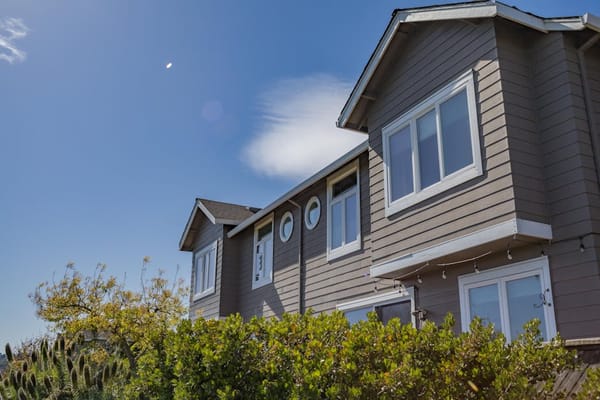

Siding installation in Mill Valley, California, costs between $12,500 and $28,000 for a typical 2,000-square-foot home in 2026 (Hamilton Exteriors 2024-2026 project data). The final price depends on the material you choose, the complexity of your home's architecture, and whether you need to comply with Marin County's stringent Wildland-Urban Interface (WUI) fire zone requirements. This guide breaks down every factor that influences your siding cost in Mill Valley, from material pricing per square foot to local permit fees, so you can budget with confidence.
At Hamilton Exteriors, we provide fully itemized estimates with per-square-foot pricing. Our team, led by Alex Hamilton Li, a licensed architect and general contractor (CSLB #1078806), has completed over 500 projects across the Bay Area, including numerous siding installations in Mill Valley's unique hillside and coastal neighborhoods.
Average Siding Installation Cost in Mill Valley (2026)
For a standard single-family home in Mill Valley with 1,500 to 2,500 square feet of exterior wall area, here is what you can expect to pay for a full siding replacement in 2026:
- Vinyl siding: $12,500 to $18,000
- James Hardie fiber cement siding: $18,000 to $28,000
- Stucco siding: $16,000 to $24,000
- Wood siding (cedar, redwood): $20,000 to $35,000
These ranges include removal of existing siding, installation of a new weather-resistant barrier, materials, labor, trim, and cleanup. They do not include structural repairs, which are common in Mill Valley's older housing stock. According to the U.S. Census Bureau American Community Survey, roughly 70% of Mill Valley homes were built before 1980, meaning many will need some level of sheathing repair or seismic upgrade before new siding goes on.
Why do Mill Valley siding projects cost more than the national average? Three primary reasons. First, Marin County labor rates are 20 to 30 percent higher than the U.S. average, driven by the Bay Area's cost of living. Second, Mill Valley's location in a WUI High or Very High Fire Hazard Severity Zone (FHSZ), as designated by CAL FIRE, mandates specific fire-resistant materials and installation methods that add to material and labor costs. Third, the town's hilly terrain, narrow winding roads, and limited access to many properties increase the logistical complexity of material delivery and installation.
Cost by Siding Material in Mill Valley
Vinyl Siding: $6 to $9 per Square Foot Installed
Vinyl siding is the most budget-friendly option for Mill Valley homeowners. Premium CertainTeed and Ply Gem vinyl products offer a clean, low-maintenance exterior with a lifespan of 20 to 40 years. However, vinyl has a significant limitation in Mill Valley: it is not fire-rated. In a WUI zone where ember intrusion is a primary concern, vinyl can melt or ignite, making it a less common choice for homes in the hillside neighborhoods of Blithedale Canyon, Cascade Canyon, and Homestead Valley. It remains a viable option for homes in the flatter, more densely developed areas of downtown Mill Valley and Sycamore Park, where fire risk is somewhat lower.
James Hardie Fiber Cement Siding: $9 to $14 per Square Foot Installed
James Hardie fiber cement siding is the most popular choice for Mill Valley homes, and for good reason. It carries a Class A fire rating, the highest available, and will not ignite or melt when exposed to flames or embers. This makes it the preferred material for homes in Marin County's WUI zones, which encompass the vast majority of Mill Valley. James Hardie's HZ10 product line was specifically engineered for high-humidity coastal climates like Mill Valley's, where persistent fog and moisture can cause wood to rot and vinyl to warp.
According to Remodeling Magazine's 2024 Cost vs. Value Report, fiber cement siding delivers an 86% return on investment at resale, the highest of any siding material. Hamilton Exteriors is a James Hardie Elite Preferred installer, meaning our crews are factory-trained and your installation carries an extended warranty. For a deep dive into this material, see our James Hardie siding guide.
Stucco Siding: $8 to $12 per Square Foot Installed
Traditional three-coat stucco is a common sight on Mill Valley's Mediterranean and Spanish Colonial homes. Stucco is non-combustible, making it an excellent choice for fire-prone areas. It also performs well in Mill Valley's coastal climate, resisting moisture and fog when properly maintained. A stucco exterior can last 50 to 80 years, but it requires periodic painting and crack repair. The application process is labor-intensive and weather-dependent, which can extend project timelines during Mill Valley's wet winter months.
Wood Siding: $10 to $17 per Square Foot Installed
Cedar and redwood siding are iconic in Mill Valley, particularly on the Craftsman and mid-century homes that dot the hillsides. Wood offers a natural, warm aesthetic that many homeowners love. However, in Mill Valley's damp, foggy environment, wood siding requires vigilant maintenance. Without regular painting or staining every 3 to 5 years, it is susceptible to rot, mold, and insect damage. For homes in WUI zones, wood siding must be treated with a fire-retardant coating or replaced with a non-combustible alternative to meet California Building Code Chapter 7A requirements. This treatment adds $2 to $4 per square foot to the project cost.
What Affects Your Siding Installation Cost in Mill Valley?
Two homes on the same Mill Valley street can receive quotes that differ by $10,000 or more (Hamilton Exteriors 2024-2026 project data). Here are the factors that drive those differences:
Home size and wall area. This is the primary cost driver. Siding is priced per square foot of exterior wall area, which is not the same as your home's floor area. A 2,000-square-foot home might have 1,800 to 2,500 square feet of siding, depending on the number of stories, window and door openings, and architectural complexity.
Number of stories. Multi-story homes require scaffolding or pump jacks, which add $1,500 to $4,000 to the project cost (Hamilton Exteriors 2024-2026 project data). Many Mill Valley homes are built on steep hillside lots, with three or even four stories on the downhill side. These homes require extensive scaffolding and safety systems, increasing labor costs by 15 to 25 percent.
Siding removal and disposal. Removing old siding costs $1 to $3 per square foot (Hamilton Exteriors 2024-2026 project data). If your home has multiple layers of siding, or if the existing siding contains hazardous materials like lead paint or asbestos (common in pre-1978 homes), removal costs can increase significantly. Mill Valley's older housing stock means these discoveries are not unusual.
Sheathing repair. Once the old siding is removed, the underlying plywood or OSB sheathing is exposed. In Mill Valley's damp climate, it is common to find water damage, dry rot, or termite damage that was hidden behind the siding. Replacing damaged sheathing costs $75 to $150 per 4x8 sheet, and it is not uncommon to need 10 to 20 sheets on an older Mill Valley home (Hamilton Exteriors 2024-2026 project data).
Seismic upgrades. Marin County is located on the western edge of the San Andreas Fault, and most of the county is classified as moderate seismic risk by the U.S. Geological Survey. When siding is removed, it exposes the home's shear wall, which is critical for earthquake resistance. Many older Mill Valley homes lack adequate shear wall nailing or hold-downs. Bringing the shear wall up to current code while the walls are open adds $2,000 to $8,000 to the project but is a wise investment in a seismically active region.
Fire zone compliance. As noted, most of Mill Valley falls within a WUI High or Very High FHSZ. This requires Class A fire-rated siding, ember-resistant vents, and specific flashing details at all wall penetrations. Fire zone compliance adds $1,500 to $4,000 to a typical siding project. For more context on fire safety requirements, see our roof replacement cost guide, which covers related WUI roofing mandates.
Accessibility. Many Mill Valley homes are accessed via narrow, winding roads with limited turnaround space for delivery trucks. Some hillside properties require material to be hand-carried or delivered in smaller loads, which increases labor time. Crane lifts for material delivery, when feasible, can add $500 to $2,000 (Hamilton Exteriors 2024-2026 project data).
Permit fees. The City of Mill Valley Building Department requires a building permit for siding replacement. Permit fees are typically calculated based on the project valuation. For a siding project valued at $20,000, the permit fee is approximately $400 to $700. Your contractor should pull the permit; if they suggest skipping it, find a different contractor. Unpermitted work can create problems when you sell your home and may not meet current fire and seismic codes.
Mill Valley Siding Costs vs. Other Marin County Cities
Siding costs vary across Marin County due to differences in labor availability, permit fees, and the prevalence of WUI zones. Here is how Mill Valley compares to neighboring cities for a typical 2,000-square-foot James Hardie fiber cement siding project:. Pricing reflects Hamilton Exteriors 2024-2026 project data.
| City | Typical Fiber Cement Cost (2,000 sq ft) | Key Cost Driver |
|---|---|---|
| Mill Valley | $18,000 – $28,000 | WUI compliance, hillside access |
| San Rafael | $17,000 – $26,000 | Mix of flatland and hillside, lower WUI prevalence in central areas |
| Tiburon | $20,000 – $30,000 | High-end homes, coastal exposure, strict architectural review |
| Larkspur | $17,000 – $26,000 | Similar to Mill Valley but with more flatland homes |
| Novato | $16,000 – $24,000 | Drier climate, less WUI coverage, more new construction |
| Sausalito | $19,000 – $29,000 | Steep hillside lots, limited access, coastal corrosion |
Mill Valley sits at the higher end of Marin County siding costs, driven by its extensive WUI coverage, challenging hillside terrain, and older housing stock. For a broader perspective, see our Bay Area siding cost guide.
Hidden Costs to Watch For in Mill Valley
A siding replacement can uncover issues that were not visible during the initial inspection. Reputable contractors will discuss potential hidden costs upfront and provide pricing for common contingencies.
Dry rot repair. Mill Valley's persistent fog and moisture create ideal conditions for dry rot, a fungal decay that destroys wood framing. When siding is removed, dry rot is often discovered around windows, doors, and at the base of walls. Repairing rotted framing and sheathing can add $1,000 to $5,000 to the project, depending on the extent of the damage (Hamilton Exteriors 2024-2026 project data).
Termite damage. Marin County has a significant subterranean termite population. Termite damage to wall framing is often hidden behind siding. If termite damage is discovered, it must be repaired before new siding is installed. The California Structural Pest Control Board recommends a pest inspection before any major exterior renovation.
Lead paint and asbestos abatement. Homes built before 1978 may have lead paint on the original siding. Homes built before the 1980s may have asbestos in the siding itself or in the building paper underneath. If lead or asbestos is present, it must be abated by a certified professional before work can proceed. Abatement can add $2,000 to $10,000 to the project (Hamilton Exteriors 2024-2026 project data). A reputable contractor will discuss this possibility during the estimate.
Window and door flashing. The interface between siding and windows or doors is a common leak point. During a siding replacement, it is standard practice to replace all window and door flashing with modern, code-compliant materials. This costs $50 to $150 per opening and is essential for preventing water intrusion (Hamilton Exteriors 2024-2026 project data).
Insulation upgrades. With the siding removed, the wall cavity is accessible. This is an ideal time to upgrade wall insulation, which can improve your home's energy efficiency and comfort. Adding blown-in or batt insulation costs $1 to $3 per square foot of wall area. In Mill Valley's climate, where winter temperatures can dip into the 30s and summer fog keeps homes cool, upgraded insulation can reduce heating costs by 10 to 20 percent, according to the U.S. Department of Energy.
How to Save on Your Mill Valley Siding Installation
Siding replacement is a significant investment, but there are legitimate ways to reduce your cost without compromising quality.
Get three or more itemized estimates. This is the single most important thing you can do. Insist on itemized estimates that break out removal, materials, labor, permits, and cleanup as separate line items. Lump-sum bids make it impossible to compare apples to apples and often hide markups.
Schedule in the off-season. November through February is the slower season for exterior contractors in Marin County. While rain can cause delays, contractors often offer more competitive pricing during these months to keep their crews busy. You may save 5 to 10 percent on labor.
Choose fiber cement over wood. While wood siding has a classic Mill Valley look, fiber cement offers a similar aesthetic with far lower maintenance costs and better fire resistance. Over a 30-year period, the total cost of ownership for fiber cement is typically 20 to 30 percent lower than wood, factoring in painting, repairs, and insurance premium differences.
Bundle with other exterior work. If you are also planning to replace your roof, windows, or gutters, bundling these projects with your siding replacement can save 10 to 15 percent on overall labor costs. The contractor only mobilizes once, and the project benefits from a single permit and inspection cycle. Hamilton Exteriors offers Bay Area siding services alongside roofing, windows, and full exterior renovations.
Check for manufacturer rebates. James Hardie, CertainTeed, and other manufacturers periodically offer rebates on siding products. Your contractor should know about current promotions. Rebates typically range from $100 to $500 for qualifying installations (Hamilton Exteriors 2024-2026 project data).
Consider financing. Rather than choosing cheaper materials to fit a cash budget, many homeowners finance a higher-quality siding installation with manageable monthly payments. This often results in a better long-term value because premium materials like fiber cement last significantly longer and require less maintenance. Ask your contractor about available financing options.
How Hamilton Exteriors Approaches Mill Valley Siding Projects
At Hamilton Exteriors, we approach every Mill Valley siding project with an architect's eye and a builder's practicality. Here is what sets us apart:
Architect-led process. Unlike most siding contractors, Hamilton Exteriors is led by Alex Hamilton Li, a licensed architect and general contractor (CSLB #1078806). This means we evaluate your siding as part of the whole building system, considering fire safety, seismic performance, moisture management, and aesthetics together. If your home needs shear wall upgrades or fire-rated assembly details, we identify those needs during the estimate, not after the walls are open.
Mill Valley-specific expertise. We have completed siding projects throughout Mill Valley, from the flats of Sycamore Park to the steep canyons of Blithedale and Cascade. We know the City of Mill Valley Building Department permit process, the Marin County WUI requirements, and the logistical challenges of working on narrow hillside streets. Our crews are experienced with the scaffolding and safety systems required for multi-story hillside homes.
Fully itemized estimates. Every estimate we provide breaks out each cost component: removal and disposal, weather-resistant barrier, siding material, trim, flashing, labor, permit fees, and cleanup. You see exactly where every dollar goes. We also include per-sheet pricing for sheathing repair and per-linear-foot pricing for fascia replacement, so there are every cost itemized if hidden damage is discovered.
Factory-certified installation. We are a James Hardie Elite Preferred installer, the highest certification level. Our crews are factory-trained in Hardie's installation methods, and your installation carries an extended warranty. We also hold certifications from CertainTeed and GAF, reflecting our commitment to manufacturer-approved installation practices.
50-year warranty. When you choose a James Hardie siding system installed by an Elite Preferred contractor, you get a 50-year non-prorated material warranty backed by our own workmanship guarantee. If anything fails, we fix it.
Frequently Asked Questions
How much does siding installation cost in Mill Valley?
A full siding replacement in Mill Valley costs $12,500 to $28,000 for a typical 2,000-square-foot home, depending on the material (Hamilton Exteriors 2024-2026 project data). Vinyl siding is the most affordable at $6 to $9 per square foot installed. James Hardie fiber cement, the most popular choice in Mill Valley's fire zones, costs $9 to $14 per square foot installed. These ranges include removal of old siding, weather-resistant barrier, materials, labor, trim, and cleanup.
What is the best siding material for Mill Valley homes?
James Hardie fiber cement siding is the best choice for most Mill Valley homes. It carries a Class A fire rating, resists moisture and fog, and will not rot or warp in Mill Valley's coastal climate. It delivers an 86% return on investment at resale, according to Remodeling Magazine. For homes in WUI fire zones, which cover most of Mill Valley, fiber cement meets California Building Code Chapter 7A requirements without needing additional fire-retardant treatment.
Do I need a permit for siding replacement in Mill Valley?
Yes. The City of Mill Valley Building Department requires a building permit for siding replacement. Permit fees are based on the project valuation and typically range from $400 to $700 for a standard siding project (Hamilton Exteriors 2024-2026 project data). Your contractor should pull the permit and schedule all inspections. Unpermitted siding work can create problems when you sell your home and may not meet current fire and seismic codes.
How long does a siding installation take in Mill Valley?
A typical James Hardie fiber cement siding installation in Mill Valley takes 1 to 2 weeks, depending on the home's size, number of stories, and architectural complexity. Vinyl siding is faster, typically 3 to 5 days. Stucco takes longer, often 2 to 3 weeks, due to the multiple coats and curing time required. Project timelines can be extended during Mill Valley's rainy winter months, when wet weather prevents installation.
Does new siding help with fire protection in Mill Valley?
Yes. Most of Mill Valley is in a WUI High or Very High Fire Hazard Severity Zone. Class A fire-rated siding, such as James Hardie fiber cement or stucco, provides critical perimeter protection against ember intrusion and radiant heat. Combined with a Class A roof and ember-resistant vents, fire-rated siding creates a complete exterior envelope that meets California Building Code Chapter 7A requirements. Vinyl siding is not fire-rated and is not recommended for homes in WUI zones.
How does Mill Valley's climate affect siding choices?
Mill Valley's coastal fog and moisture create a challenging environment for exterior materials. Wood siding is prone to rot and mold without vigilant maintenance. Vinyl can warp in direct sun and is not fire-rated. Fiber cement and stucco perform best in Mill Valley's climate, resisting moisture, fog, and temperature swings. James Hardie's HZ10 product line was specifically engineered for high-humidity coastal climates like Mill Valley's.
Does new siding increase home value in Mill Valley?
Yes. According to Remodeling Magazine's 2024 Cost vs. Value Report, fiber cement siding recoups 86% of its cost at resale nationally. In Mill Valley's competitive real estate market, where buyers are sophisticated and often wary of deferred maintenance, new siding can be even more valuable. A home with new, fire-rated siding is more attractive to buyers than one facing an imminent siding replacement.
What is the difference between fiber cement and vinyl siding?
Fiber cement (James Hardie) is made from cement, sand, and cellulose fibers. It carries a Class A fire rating, resists rot and termites, and lasts 50+ years. Vinyl siding costs less upfront but has a shorter lifespan (20 to 40 years), can warp in direct sun, and is not fire-rated. For Mill Valley homes, especially those in WUI fire zones, fiber cement is the stronger long-term investment.
Can I install new siding over my existing siding?
In most cases, installing new siding over existing siding is not recommended in Mill Valley. The existing siding may be hiding moisture damage, dry rot, or termite damage that will continue to worsen if not addressed. Removing the old siding allows for a full inspection of the sheathing and framing, installation of a modern weather-resistant barrier, and any necessary seismic or fire-safety upgrades. California Building Code also limits the total thickness of siding layers.
How do I know if my siding needs replacement?
Common signs include warping or buckling panels, soft or spongy spots indicating moisture damage, peeling paint that returns quickly after repainting, visible cracks or holes, mold or mildew growth between panels, and rising energy bills from air infiltration. If damage affects more than 30% of your siding, full replacement is more cost-effective than patching. Hamilton Exteriors provides a complimentary on-site inspection to assess your siding's condition.
Does new siding help with energy efficiency?
Yes. When siding is removed, the wall cavity is accessible for insulation upgrades. Adding blown-in or batt insulation can reduce heating and cooling costs by 10 to 20 percent, according to the U.S. Department of Energy. Fiber cement and stucco siding also provide thermal mass, which helps regulate indoor temperatures. In Mill Valley's climate, where winter nights can be cold and summer days are moderated by fog, improved wall insulation enhances year-round comfort.
What is dry rot and how does siding prevent it?
Dry rot is fungal decay that destroys wood framing when moisture penetrates behind siding. Mill Valley's foggy, damp climate makes dry rot a common problem, especially in older homes. Modern siding installation includes a weather-resistant barrier with integrated flashing at every window, door, and penetration, creating a continuous drainage plane that channels water down and out. Fiber cement and vinyl siding are both immune to rot themselves, but the barrier system behind them is what protects your framing.
Related Reading
- Bay Area Siding Cost Guide — Comprehensive pricing across all Bay Area counties
- James Hardie Siding: The Bay Area Homeowner's Guide — Deep dive on fiber cement siding
- Bay Area Fire Zone Roofing Requirements — WUI compliance for your home's exterior
- How to Choose an Exterior Contractor in the Bay Area — Vetting tips for homeowners
- ADU Cost in the Bay Area — If you are considering an ADU alongside your siding project