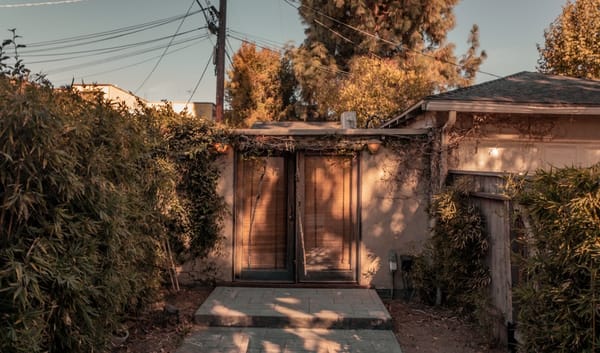

Building an accessory dwelling unit (ADU) in Yountville costs between $150,000 and $375,000 in 2026, depending on the type of structure, its size, finish level, and your property's specific conditions (Hamilton Exteriors 2024-2026 project data). Whether you're considering a detached backyard cottage among the vineyards, a garage conversion in a historic neighborhood, or a junior ADU carved from existing space, this guide breaks down real 2026 pricing so you can plan your budget with confidence.
Yountville presents a unique ADU landscape. As one of Napa County's most desirable towns, property values here rank among the highest in the North Bay. The town's strict design guidelines, wine-country aesthetic conventions, and location within a Very High Fire Hazard Severity Zone all influence what you'll pay to build. But the return on investment is equally compelling — a well-built ADU in Yountville can generate premium rental income and add substantial equity to your property.
Here's what you should actually expect to pay.
Average ADU Cost in Yountville (2026)
ADU costs vary significantly based on what you're building. Here are the ranges we see across projects in Napa County and specifically in Yountville:
- Detached ADU: $225,000-$375,000
- Garage conversion: $150,000-$200,000
- Junior ADU (JADU): $150,000 and up
- Cost per square foot: $300-$450 for new construction
These numbers include design, engineering, permitting, and construction. They don't include furniture, landscaping, or optional upgrades like solar panels or EV charging.
Yountville's costs run 10-15% above the Napa County average due to several local factors. The town's design review process, while thorough, adds time and complexity. Many properties sit on parcels with specific aesthetic requirements that influence material choices. And the local labor market — competing with high-end winery and hospitality construction — commands premium rates for skilled trades.
For broader context, our Bay Area ADU cost guide covers pricing across all six counties we serve, from San Jose to Marin.
ADU Cost by Type
The type of ADU you choose is the single biggest factor in your total cost. Each has distinct advantages depending on your property, timeline, and budget.
Detached ADU Cost: $225,000-$375,000
A detached ADU is a standalone structure built in your backyard, separate from your main home. These range from 400 to 1,200 square feet and include a new foundation, independent utility connections, a full kitchen, and at least one bathroom.
Detached ADUs are the most expensive option, but they also deliver the highest return. According to Freddie Mac research, properties with ADUs sell for significantly more than comparable homes without them Freddie Mac. In Yountville, where median home values exceed $1.5 million, the equity gain from a well-designed detached ADU can be substantial.
The higher price tag comes from several factors unique to detached construction:
- New concrete foundation (slab or raised, engineered for Yountville's seismic conditions)
- Full framing, roofing, and exterior cladding that meets town design standards
- Trenching for utility runs from the main house or street
- Separate electrical panel and potentially separate meter
- Complete interior buildout including kitchen and bath
For most Yountville homeowners, a detached ADU in the 500-750 square foot range hits the sweet spot between livability and cost efficiency. You get a genuine one-bedroom apartment that functions independently, without the per-square-foot premium of going smaller or the diminishing returns of going much larger.
Garage Conversion Cost: $150,000-$200,000
Converting an existing garage into a living space is the fastest and most affordable path to an ADU. Because you're working within an existing structure, you save 30-40% on foundation and framing costs compared to building from scratch.
A typical two-car garage conversion yields 400-500 square feet of living space. The existing slab, walls, and roof structure remain, but you'll need to:
- Insulate walls and ceiling to meet Title 24 energy standards
- Install plumbing for kitchen and bathroom
- Upgrade electrical to support residential loads
- Add windows for natural light and egress
- Replace the garage door with a finished wall or large window
- Install HVAC for heating and cooling
One common concern is losing parking. Under California law (AB 68), cities cannot require replacement parking when you convert a garage to an ADU. This removed one of the biggest barriers that previously blocked garage conversions in many Bay Area cities.
Timeline is another advantage. A garage conversion typically takes 10-14 weeks from permit approval to move-in, compared to 4-6 months for a detached build. If speed matters, this is your best option.
Junior ADU Cost: $150,000 and up
A Junior ADU (JADU) is the most affordable option. It's created within the existing footprint of your home, typically by converting a bedroom, attached garage, or other existing space into a semi-independent unit.
JADUs must be 500 square feet or less and share at least one wall with the main house. They include an efficiency kitchen (small sink, cooking appliance, and counter space) and a bathroom. Some JADUs share a bathroom with the main house, though most homeowners prefer to include a dedicated one.
The cost savings come from working entirely within your existing structure. There's no new foundation, no new roof, and minimal exterior work. The bulk of the budget goes toward:
- Adding or upgrading a bathroom
- Installing an efficiency kitchen
- Creating a separate entrance
- Soundproofing the shared wall
- Meeting fire separation requirements
Here's an important bonus: under SB 9 and existing ADU law, you can build both a JADU and a standard ADU on the same single-family lot. This means you could convert a bedroom into a JADU and build a detached ADU in your backyard, creating two additional units on one property.
ADU Cost Breakdown: Where Your Money Goes
Understanding where your money goes helps you make informed decisions about where to invest and where to economize. Here's a detailed breakdown for a typical detached ADU project in Yountville:
Design and architecture: $12,000-$25,000 (5-8% of total) (Hamilton Exteriors 2024-2026 project data). This covers architectural drawings, 3D renderings, and construction documents. Working with an architect who understands Yountville's design guidelines and Napa County's ADU-specific regulations saves time and avoids costly revisions during permitting. Cookie-cutter plans may cost less upfront but often require expensive modifications to meet the town's specific requirements.
Engineering: $6,000-$14,000 (Hamilton Exteriors 2024-2026 project data). Structural engineering, civil engineering (for grading and drainage), and Title 24 energy compliance calculations. Every ADU in California requires a Title 24 energy report, and Yountville lots typically need a soils report and structural engineering for seismic compliance given the proximity to the West Napa Fault.
Permits and fees: $8,000-$18,000. This varies based on project scope and includes plan check fees, building permits, school impact fees, and utility connection fees. Yountville processes permits through the Town of Yountville building department, and fees are calculated based on project valuation Town of Yountville ADU Information.
Site preparation: $20,000-$40,000 (Hamilton Exteriors 2024-2026 project data). Grading, trenching for utilities, demolition of existing structures (old shed, concrete patio), tree removal or protection, and temporary fencing. Yountville properties with mature landscaping or vineyard-adjacent parcels may require additional tree protection measures during construction.
Foundation: $18,000-$35,000. A standard slab-on-grade foundation for a 500-square-foot ADU runs about $18,000-$22,000. Raised foundations, pier-and-beam systems for sloped lots, or engineered foundations for the seismic conditions near the West Napa Fault can push this to $35,000 or more. The 2014 South Napa earthquake underscored the importance of proper seismic engineering in this region USGS.
Framing and exterior: $30,000-$55,000 (Hamilton Exteriors 2024-2026 project data). Wood framing, roof structure, exterior sheathing, windows, doors, siding, and roofing material. This is where the physical structure takes shape. Material choices (fiber cement siding vs. stucco, composition shingles vs. standing seam metal) significantly affect cost. Yountville's design guidelines may influence exterior material selections to maintain consistency with the town's wine-country character.
Plumbing: $9,000-$16,000 (Hamilton Exteriors 2024-2026 project data). Kitchen and bathroom rough-in, water heater, connection to main sewer line, and fixtures. If your ADU is far from the main sewer connection, trenching for the sewer lateral can add $5,000-$10,000.
Electrical: $7,000-$13,000 (Hamilton Exteriors 2024-2026 project data). Panel, wiring, outlets, lighting, and connection to utility service. A separate 100-amp subpanel is standard. If you want a separate meter for independent billing, add $3,000-$5,000 for the meter pedestal and additional utility work.
HVAC: $6,000-$11,000 (Hamilton Exteriors 2024-2026 project data). A mini-split heat pump system is the standard for Bay Area ADUs. They're energy efficient, provide both heating and cooling, and don't require ductwork. Yountville's hot dry summers make efficient cooling essential, while mild winters reduce heating demands compared to coastal locations.
Interior finishes: $18,000-$45,000 (Hamilton Exteriors 2024-2026 project data). Drywall, paint, flooring, kitchen cabinets, countertops, bathroom tile, and fixtures. This is where personal preference drives the biggest cost variation. Builder-grade finishes keep you at the lower end; custom cabinetry, quartz countertops, and hardwood floors push toward the top. Many Yountville homeowners opt for finishes that complement the wine-country aesthetic of their primary residence.
Utility connections: $5,000-$20,000 (Hamilton Exteriors 2024-2026 project data). Connecting water, sewer, gas, and electrical from the main house or street to your ADU. Distance is the key variable. An ADU 20 feet from the house costs far less to connect than one 80 feet away at the back of a deep lot.
Yountville-Specific Factors That Affect ADU Cost
Yountville isn't just another Bay Area town. Several local factors influence what you'll pay to build an ADU here, and understanding them early helps you budget accurately.
Fire Zone Compliance: WUI Very High FHSZ
Most of Napa County, including Yountville, falls within a Wildland-Urban Interface (WUI) Very High Fire Hazard Severity Zone. This designation, reinforced after the devastating 2017 wildfires that affected Napa and Sonoma counties, carries specific construction requirements that add cost to any new build CAL FIRE.
For your ADU, this means:
- Class A fire-rated roofing materials required (standing seam metal, composition shingles with Class A rating, or tile)
- Exterior walls must use ignition-resistant materials (fiber cement siding, stucco, or treated wood)
- Vents must have 1/8-inch corrosion-resistant metal mesh screens to prevent ember intrusion
- Windows in certain exposures may require tempered glass
- Defensible space requirements around the structure (typically 100 feet of managed vegetation)
These requirements typically add $10,000-$25,000 to your project compared to building in a non-WUI zone. The Napa Sonoma ADU Center provides additional guidance on fire-safe ADU construction specific to our region Napa Sonoma ADU Center.
Seismic Engineering: West Napa Fault
Yountville sits near the West Napa Fault, which produced the magnitude 6.0 South Napa earthquake in 2014. That event caused significant damage throughout Napa County and serves as a reminder that proper seismic engineering is a necessity, not an option.
For ADU construction, this translates to:
- Engineered foundation with deeper footings and reinforced concrete
- Shear wall requirements that exceed standard California Building Code minimums
- Potential for geotechnical report requirements beyond standard soils testing
- Stricter plan check review for structural elements
Budget an additional $5,000-$12,000 for seismic-related engineering and construction compared to building in a lower-risk zone (Hamilton Exteriors 2024-2026 project data). This is money well spent — the 2014 earthquake damaged dozens of structures in the Napa Valley, and a properly engineered ADU will withstand the next significant event.
Design Review and Wine-Country Aesthetics
Yountville takes its visual character seriously. The town's design guidelines aim to preserve the wine-country aesthetic that makes it one of Napa Valley's most visited destinations. While ADUs benefit from state-law streamlining, exterior design elements may still face scrutiny.
Expect to address:
- Exterior material and color selections that complement the primary residence and neighborhood
- Roof pitch and style consistent with surrounding structures
- Window placement and proportions that maintain streetscape character
- Landscaping plans that integrate the ADU into the existing parcel
This doesn't mean you can't build what you want — it means you should budget for an architect who understands Yountville's expectations and can navigate the review process efficiently. The time investment in good design upfront typically saves weeks of back-and-forth during plan check.
Climate Considerations: Hot Summers, Mild Winters
Yountville's climate differs meaningfully from coastal Bay Area locations. Summer temperatures regularly exceed 90°F, with occasional spikes above 100°F. Winters are mild and wet, with most precipitation falling between November and March NOAA.
For your ADU, this means:
- Cooling capacity is more important than heating. Size your mini-split system for peak summer loads.
- Roofing materials must handle intense UV exposure. Composition shingles in darker colors may degrade faster here than in foggy San Francisco.
- Proper ventilation is critical. Attic and crawl space ventilation prevents moisture buildup during wet winters and reduces cooling loads during hot summers.
- Exterior paint and finishes face more UV stress than coastal locations. Budget for premium exterior paints with UV inhibitors.
ADU Permit Process in Yountville
Yountville processes ADU permits through the Town of Yountville Building Division. Under California state law (AB 68, SB 13), the town must approve or deny a complete ADU permit application within 60 days.
The typical permit timeline for a Yountville ADU runs:
- Pre-application review (optional but recommended): 2-4 weeks. Town staff review your concept and flag potential issues before you invest in full construction documents.
- Plan preparation: 4-8 weeks. Your architect or designer prepares complete construction documents, including site plan, floor plans, elevations, structural engineering, and Title 24 energy calculations.
- Plan check: 4-8 weeks. The town reviews your submittal for compliance with building codes, zoning, and design guidelines. Expect at least one round of corrections.
- Permit issuance: 1-2 weeks after final approval.
Total timeline from design start to permit in hand: typically 3-5 months. Construction adds another 4-6 months for a detached ADU or 2-4 months for a garage conversion.
Permit fees in Yountville are calculated based on project valuation and typically range from $8,000 to $18,000 for a standard ADU (Hamilton Exteriors 2024-2026 project data). This includes building permit fees, plan check fees, and impact fees where applicable. Under state law, impact fees for ADUs under 750 square feet have been significantly reduced.
Alex Hamilton Li, our founder and a licensed architect and general contractor (CSLB #1078806), has permitted projects across Napa County and understands the specific requirements Yountville's building department looks for during plan review.
ADU Return on Investment in Yountville
ADUs are one of the highest-ROI home improvements you can make, and Yountville's premium real estate market amplifies the returns.
Property value increase: 20-35%. Freddie Mac's research on ADU property values found that homes with ADUs sell for significantly more than comparable homes without them. In Yountville, where median home values exceed $1 (Hamilton Exteriors 2024-2026 project data).5 million, even a 20% increase represents $300,000 or more in equity gains.
Monthly rental income: $2,200-$3,800 (Hamilton Exteriors 2024-2026 project data). Yountville's rental market is driven by hospitality workers, winery employees, and professionals who want to live in Napa Valley but can't afford — or don't want — a full single-family home. A well-finished one-bedroom ADU in Yountville can command $2,500-$3,800 per month. These rates reflect the town's desirability, walkability, and proximity to world-class dining and wineries.
Payback period: 4-8 years. A garage conversion costing $160,000 that generates $2,500 per month in rent pays for itself in about 5 (Hamilton Exteriors 2024-2026 project data).3 years, not accounting for the property value increase. A detached ADU at $300,000 renting for $3,200 per month takes about 7.8 years. Factor in the property value boost and tax benefits, and the effective payback period is often shorter.
Alternative uses beyond rental income. Not every ADU is built for rent. Many Yountville homeowners build ADUs for aging parents who want to live independently but close to family, adult children returning to the area, dedicated home offices or studios, or guest accommodations for the steady stream of friends and family who visit wine country. Even without rental income, these uses deliver value through avoided costs and improved quality of life.
ADU Financing Options
Most homeowners don't pay for an ADU entirely out of pocket. Several financing options can make your project feasible, each with different terms and requirements.
Construction loans. A construction-to-permanent loan provides funds in phases as your ADU is built, then converts to a standard mortgage once construction is complete. Interest rates are typically higher during construction (often 1-2% above conventional mortgage rates) but convert to competitive permanent rates. These loans work well for larger projects where you want to finance the full cost.
Home equity line of credit (HELOC). If you have significant equity in your Yountville home, a HELOC gives you flexible access to funds. You only pay interest on what you draw, which aligns well with the phased nature of construction spending. Current HELOC rates range from 6.5-9% depending on your credit profile and lender.
Cash-out refinance. Refinancing your existing mortgage at a higher amount lets you pull out equity as cash for your ADU project. This makes sense if current mortgage rates are favorable compared to your existing rate, or if you want to consolidate everything into a single payment.
RenoFi renovation loans. These specialty loans let you borrow based on the after-renovation value of your home, not its current value. Since an ADU significantly increases property value, RenoFi loans can provide more borrowing power than a standard HELOC.
CalHFA ADU Grant Program. The California Housing Finance Agency offers grants up to $40,000 for qualifying homeowners building ADUs. The program is specifically designed to help with predevelopment costs like permits, design, and engineering. Income limits and other eligibility requirements apply, so check the current guidelines before counting on this funding CalHFA.
Rental income projections. When applying for any of these loans, include realistic rental income projections for your ADU. Lenders increasingly recognize ADU rental income as a qualifying factor, and showing $2,500-$3,800 per month in projected rent for a Yountville ADU can significantly strengthen your application (Hamilton Exteriors 2024-2026 project data).
How Hamilton Exteriors Builds ADUs in Yountville
At Hamilton Exteriors, we handle ADU projects from initial concept through final inspection. Our approach is designed to eliminate the guesswork and fragmentation that makes ADU construction stressful for most homeowners.
Full-service delivery. We manage every phase: architectural design, structural and civil engineering, Title 24 energy calculations, permit applications, and construction. You work with one team from start to finish, not a patchwork of independent contractors who don't communicate with each other.
Architect-led construction. Our projects are led by Alex Hamilton Li, a licensed architect and general contractor (CSLB #1078806). This means design and construction decisions are made by the same team. The integration eliminates the gaps that occur when architects and builders work independently, resulting in fewer change orders and a finished product that matches what was designed.
Yountville-specific expertise. We understand the town's design guidelines, the WUI fire zone requirements, and the seismic engineering standards that apply to every project in this area. Our familiarity with the Town of Yountville building department means we know what reviewers look for, reducing back-and-forth during plan check.
Fully itemized estimates. Every proposal includes a detailed line-item breakdown so you know exactly where your money goes. No allowances, no vague categories. If something changes during construction, we discuss the cost impact before proceeding.
Efficient build timelines. Garage conversions typically take 10-14 weeks. Detached ADUs run 4-6 months of active construction after permits are approved. We maintain these timelines through careful scheduling and established relationships with our trade partners.
Napa County coverage. We serve homeowners across Napa County, including Yountville, Napa, St. Helena, Calistoga, and American Canyon. Whether you're on a flat in-town lot or a hillside parcel with vineyard views, we understand the local conditions, regulations, and building practices that affect your project.
Ready to explore your options? Call us at (650) 977-3351 or Get Your Free Quote to start with a complimentary consultation. We'll visit your property, discuss your goals, and provide a realistic cost estimate based on your specific situation.
Frequently Asked Questions
How much does a 500 sq ft ADU cost in Yountville?
A 500 square foot detached ADU typically costs $175,000-$250,000 in Yountville, including design, permits, and construction (Hamilton Exteriors 2024-2026 project data). At $300-$450 per square foot for new construction, the total depends on your site conditions, finish level, and utility connection distances. Garage conversions of similar size run $150,000-$175,000.
Is a garage conversion cheaper than a detached ADU in Yountville?
Yes, significantly. Garage conversions cost $150,000-$200,000 compared to $225,000-$375,000 for detached ADUs (Hamilton Exteriors 2024-2026 project data). You save 30-40% by reusing the existing foundation, walls, and roof structure. The tradeoff is less design flexibility and typically smaller finished square footage, usually 400-500 square feet for a two-car garage.
How long does it take to build an ADU in Yountville?
Plan for 8-14 months total from design start to move-in. Design and permitting take 3-5 months, and construction runs 4-6 months for detached ADUs or 2-4 months for garage conversions. The permitting phase is the most variable, as Yountville's design review process can add time compared to jurisdictions with less stringent aesthetic requirements.
Do I need a permit for an ADU in Yountville?
Yes. All ADUs in Yountville require a building permit from the Town of Yountville Building Division. California has streamlined the process through statewide legislation, but you still need approved plans and inspections. Building without permits creates serious problems: code violations, insurance gaps, and complications when you sell. Permitted ADUs add verified value to your property.
What are the fire zone requirements for ADUs in Yountville?
Yountville falls within a WUI Very High Fire Hazard Severity Zone. Your ADU must use Class A fire-rated roofing materials, ignition-resistant exterior walls (fiber cement or stucco), ember-resistant vents with 1/8-inch mesh screens, and maintain defensible space around the structure. These requirements typically add $10,000-$25,000 to your project compared to building in a non-WUI zone CAL FIRE.
How does the West Napa Fault affect ADU construction in Yountville?
The West Napa Fault, which produced the 2014 South Napa earthquake, requires enhanced seismic engineering for new construction. Expect engineered foundations with deeper footings, reinforced shear walls, and potentially a geotechnical report. Budget an additional $5,000-$12,000 for seismic-related engineering and construction compared to lower-risk zones USGS.
Can I rent out my ADU in Yountville?
Yes. California law explicitly allows ADU owners to rent their units as long-term rentals (30 days or more). Yountville's proximity to world-class dining, wineries, and hospitality employers creates strong rental demand. A well-finished one-bedroom ADU typically rents for $2,500-$3,800 per month (Hamilton Exteriors 2024-2026 project data). Check Yountville's local ordinances regarding short-term rentals, as many Napa Valley communities restrict rentals under 30 days.
What is the ROI on building an ADU in Yountville?
ADUs in Yountville offer strong returns. Property value typically increases 20-35%, translating to $300,000 or more in equity gains given Yountville's median home values above $1 (Hamilton Exteriors 2024-2026 project data).5 million. Monthly rental income of $2,500-$3,800 can pay back construction costs in 4-8 years. Tax benefits from depreciation and expense deductions improve the effective return further.
Does Yountville have design guidelines that affect ADU construction?
Yes. Yountville maintains design guidelines to preserve the town's wine-country character. Exterior materials, colors, roof pitch, and window placement may face review to ensure compatibility with the primary residence and neighborhood. Working with an architect familiar with Yountville's expectations streamlines the review process and avoids costly redesigns.
Can I build an ADU and a JADU on the same property in Yountville?
Yes. Under California SB 9 and existing ADU law, single-family lot owners can build one ADU plus one JADU (junior ADU up to 500 sq ft) on the same property. The JADU must be built within the existing home footprint. No additional parking is required for either unit. This combination allows Yountville homeowners to add two income-producing units to a single-family lot.
How much are ADU permit fees in Yountville?
ADU permit fees in Yountville typically range from $8,000 to $18,000, calculated based on project valuation. This includes building permit fees, plan check fees, and applicable impact fees. Under California state law, impact fees for ADUs under 750 square feet have been significantly reduced. The Town of Yountville Building Division can provide a fee estimate based on your specific project scope Town of Yountville ADU Information.
What financing options are available for ADUs in Yountville?
The most common Yountville ADU financing options are: HELOC (home equity line of credit) for $50,000-$300,000 against existing equity; cash-out refinance if your current rate allows it; renovation loans (FHA 203(k), Fannie Mae HomeStyle) which let you borrow against the future value of the property; and CalHFA's ADU Grant Program which offers up to $40,000 toward predevelopment costs. Given Yountville's high property values, many homeowners have substantial equity to leverage.
Will an ADU pay for itself in Yountville?
For most Yountville homeowners, yes. A $300,000 ADU renting at $3,000/month grosses $36,000/year. After taxes, insurance, and maintenance you net roughly $27,000-$29,000/year, which pays back the build in 10-12 years. The ADU also adds 60-80% of its build cost to the appraised value of your home, accelerating effective payback when you refinance or sell.
Do I need an architect for an ADU in Yountville?
You do not legally need a licensed architect for most ADU projects, but you do need stamped engineering and detailed plans for plan check. Given Yountville's design review process and the complexity of WUI fire zone compliance, working with an architect who understands local requirements saves time and avoids costly revisions. Hamilton Exteriors is architect-led, which means structural, mechanical, and design decisions happen under one roof.
How does Yountville's climate affect ADU design and cost?
Yountville's hot dry summers and mild wet winters influence several design decisions. Cooling capacity is more important than heating — size your HVAC system for peak summer loads above 90°F. Roofing materials must handle intense UV exposure. Proper ventilation prevents moisture buildup during wet winters. Exterior finishes face more UV stress than coastal locations, so budget for premium paints with UV inhibitors NOAA.
Related Reading
- Bay Area ADU Cost Guide: $150K-$375K Complete Pricing Breakdown
- Roof Replacement Cost in the Bay Area (2026 Guide)
- Second-Story Addition Cost in the Bay Area (2026 Guide)
- ADU Design and Construction Services
Ready to start your Yountville ADU project? Call us at (650) 977-3351 or Get Your Free Quote to schedule a complimentary on-site consultation. We'll visit your property, assess your site, and provide a detailed, itemized estimate for your specific project.